Brush filament materials
Filament choice determines cleaning performance, durability and application scope. These are the six materials we specify most often.
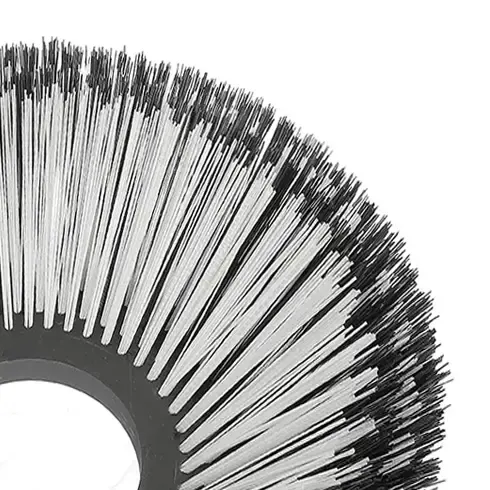
Nylon (PA)
Material characteristics
- · Long service life: maintains structural integrity under frequent sweeping, outperforming most synthetic filaments.
- · High-temperature resistance: melting point 215-260°C, stable at 80-120°C without deformation.
- · Physical stability: water absorption 3%-9% (only temporary stiffness reduction), rapid elastic recovery.
- · Chemical resistance: resists common solvents and weak acids (pH 4-8).
Technical application scope
- · Disc brushes: gentle carpet cleaning, no fibre damage.
- · Roller brushes: high-temperature industrial scenarios such as steel mills.
- · Sweeper main brooms: rough ground such as construction sites, with wear resistance.
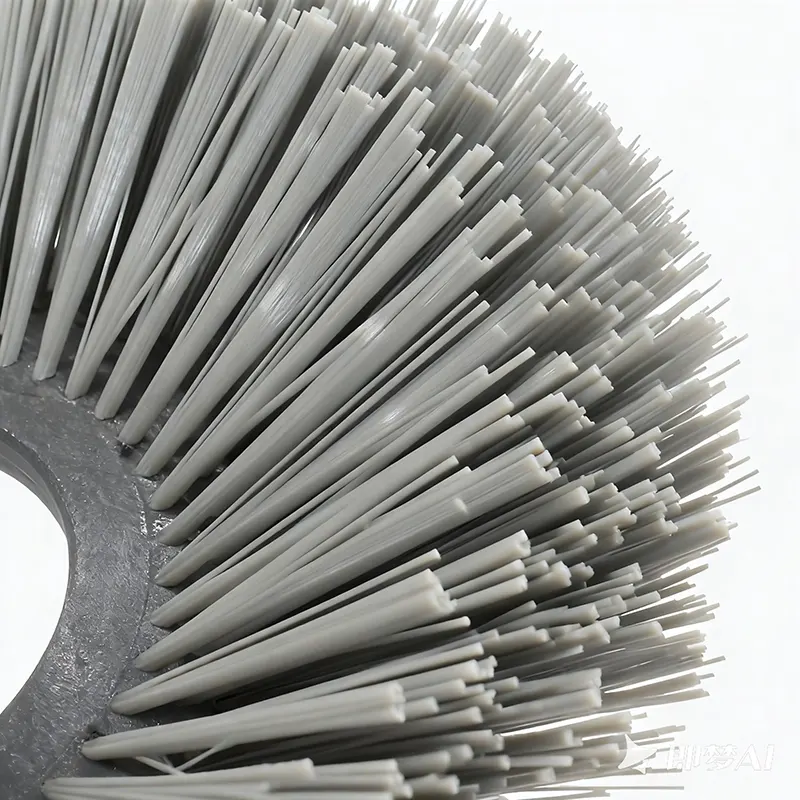
Polypropylene (PP)
Material characteristics
- · Efficient cleaning: decontamination rate >90% for light-to-moderate dirt (dust, oil).
- · Economic advantage: 25%-35% cheaper than nylon, cost-effective for large-scale use.
- · Environmental compliance: recyclable, RoHS-certified.
- · Limitations: melting point 160-170°C (not for use above 60°C), lower elastic recovery (15% less than nylon).
Technical application scope
- · Rental disc brushes: low-frequency use for equipment rental companies.
- · Sweeper side brushes: daily cleaning in residential areas and municipal roads.
- · Washing machine brushes: non-toxic, suitable for household use.
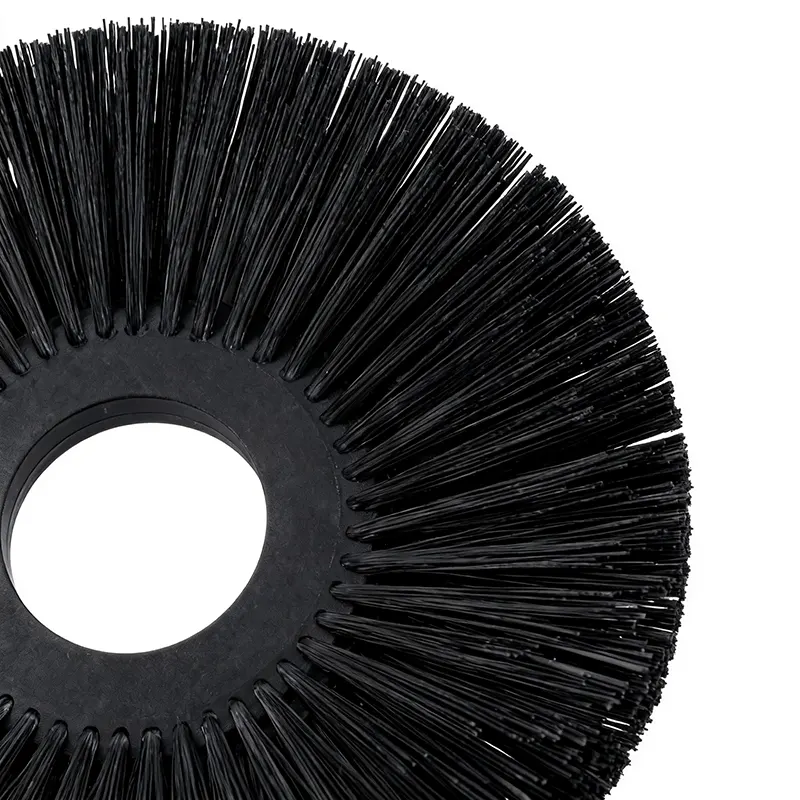
Proex (modified polypropylene)
Material characteristics
- · X-shaped cross-section: 20%-30% larger contact area and 18% higher unit-time decontamination.
- · Moisture-resistant: mould-inhibited, no mildew at 80% humidity over three months.
- · Anti-winding: the X-structure cuts hair and fibre tangles, reducing maintenance by 50%.
- · Limitation: same heat resistance as regular PP, not for high temperatures.
Technical application scope
- · Wet-environment roller brushes for underground garages and pools: cleans water and dust together.
- · Municipal sanitation side brushes for rainy-area roads, lowering maintenance cost.
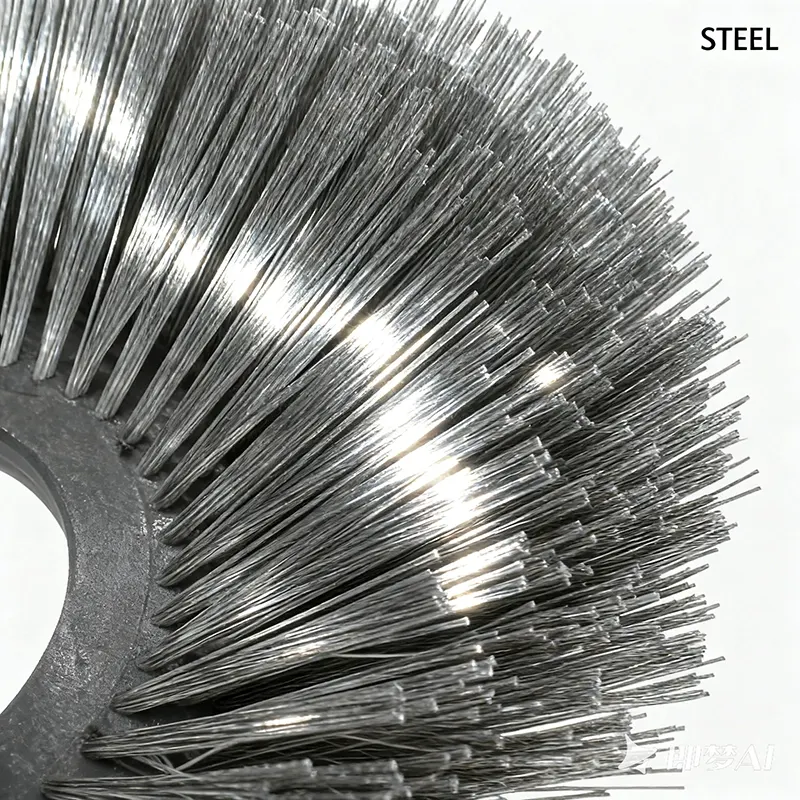
Steel wire
Material characteristics
- · Wear-resistant: high-carbon or 304 stainless steel (HRC 45-50) removes oxide scale and welding slag.
- · Strong: 1200-1500MPa breaking strength, no breakage under heavy loads.
- · Limitations: scratches smooth surfaces; carbon steel rusts in wet conditions and needs rust prevention.
Technical application scope
- · Grit rotary brushes for factory cement floors: removes 5mm-thick oil.
- · Steel mill brushes for billet oxide scale pre-treatment, replacing sandblasting.
- · Rust-removal brushes for ships and bridges; 304 stainless avoids re-rusting.
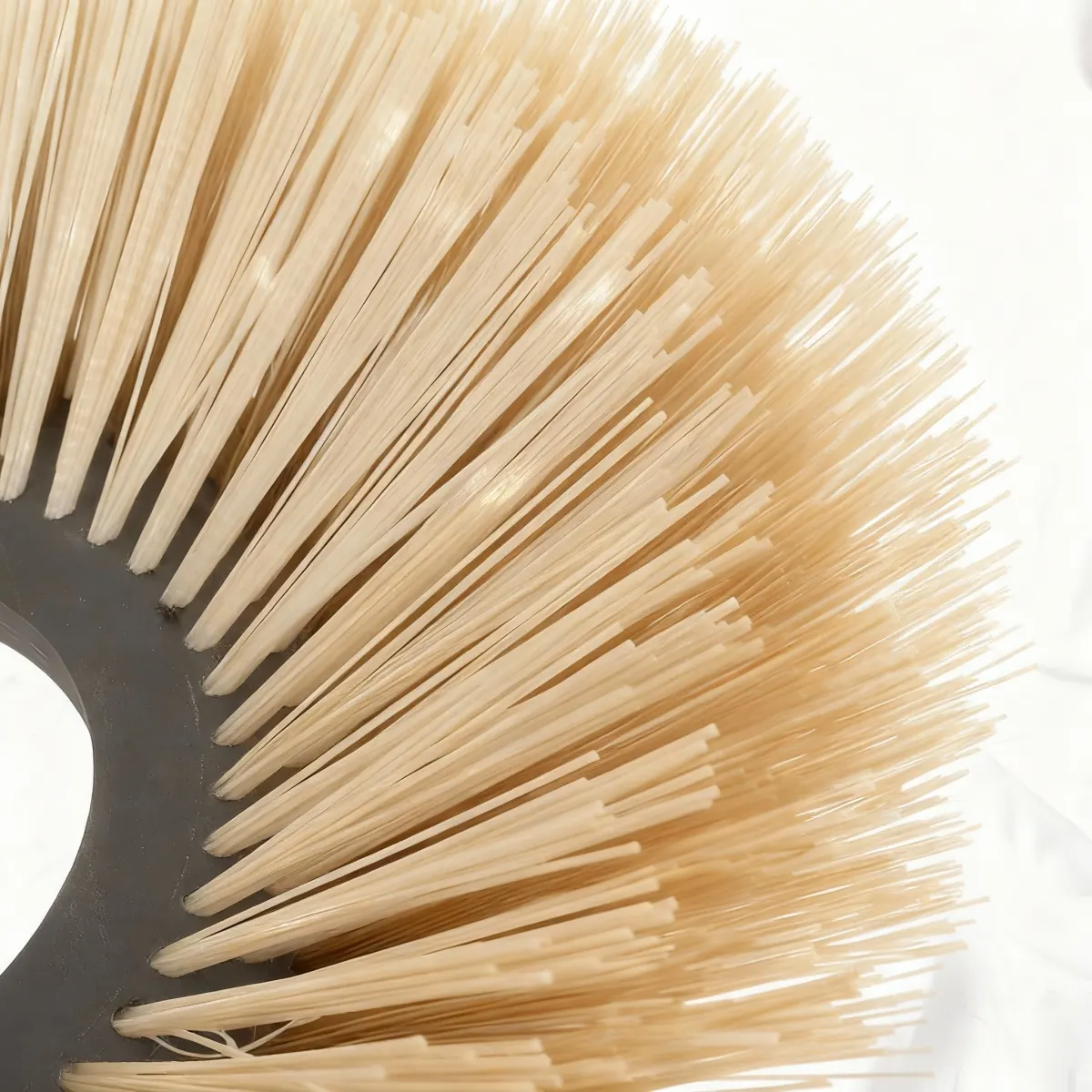
Union fibre (mixed natural fibres)
Material characteristics
- · Eco-friendly: 60% Tampico + 40% Palmyra, biodegradable.
- · Dust control: absorbs 0.1-10μm dust with 80% less emission, suitable for clean rooms.
- · Soft: Shore D20-25, safe for precision instruments and cultural relics.
- · Limitations: 2-3 month lifespan; 15% water expansion, so not for wet environments.
Technical application scope
- · Electronic factory brushes for semiconductor workshops meeting Class 1000 clean-room standard.
- · Hotel marble brushes that avoid scratches.
- · Cultural relic restoration brushes that protect surfaces.
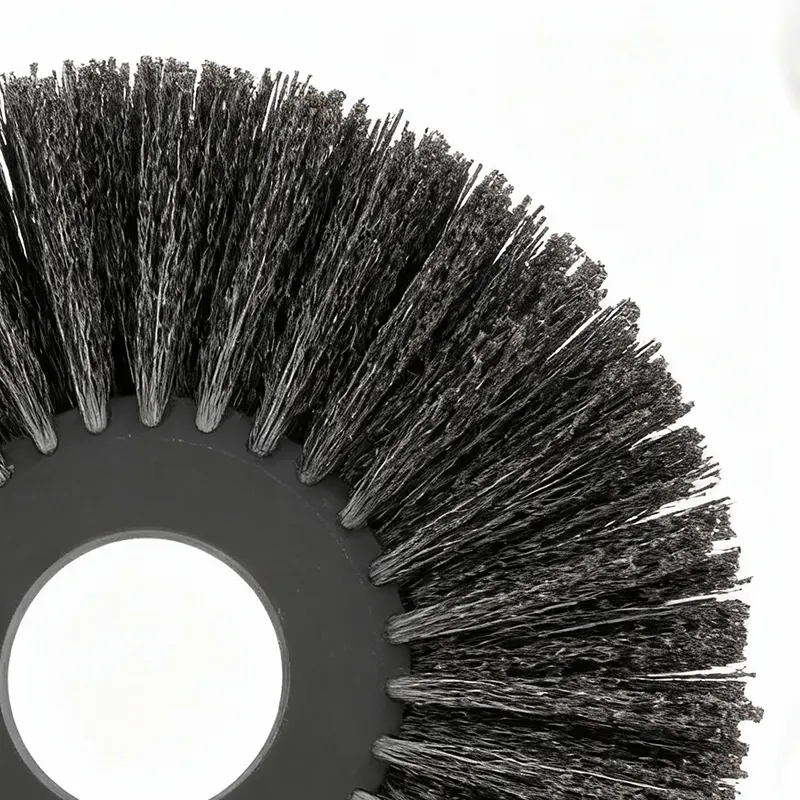
Grit rotary
Material characteristics
- · Nylon + silicon carbide: flexible and abrasive, with five customizable specs (large diameter for heavy dirt, fine particles for fine cleaning).
- · Cost-saving: replaces stripping pads, 60% cheaper per clean with 200× longer lifespan.
- · Requirement: must be used wet — dry use causes overheating.
Technical application scope
- · Mall terrazzo brushes: removes old wax with a 20% gloss boost.
- · Factory epoxy floor brushes: cleans oil without damaging the coating.
- · Airport runway brushes: removes rubber residue while preserving flatness.
Need a part that fits your machine?
Send the machine model and a photo of the original part — we confirm fitment and quote within one business day.
Request a quote